Add 2 more items to unlock your free mystery gift.
Complimentary item.
Total
Recommended add-on
Home/No, Your Marshall Speaker Is Not a Guitar Amp — and 6 Other Audio Myths That Keep Costing People Money
No, Your Marshall Speaker Is Not a Guitar Amp — and 6 Other Audio Myths That Keep Costing People Money
Audio gear attracts myths the way guitar attracts misinformation. Some are harmless. Others quietly cost you money — like buying a $200 Bluetooth speaker expecting to plug a guitar into it, or replacing perfectly good studio monitors because you read that "flat tuning means boring sound."
Today, August 16, 2026, we're settling seven of the most common misconceptions we hear from shoppers at Sonic Den Audio. Some of these myths have a grain of truth. Most don't. All of them deserve a clear answer before you spend another dollar.
Myth #1: "It says Marshall, so I can plug my guitar into it"
This is the single most common question we get about Marshall's consumer lineup, and the answer is a hard no — with one important footnote.
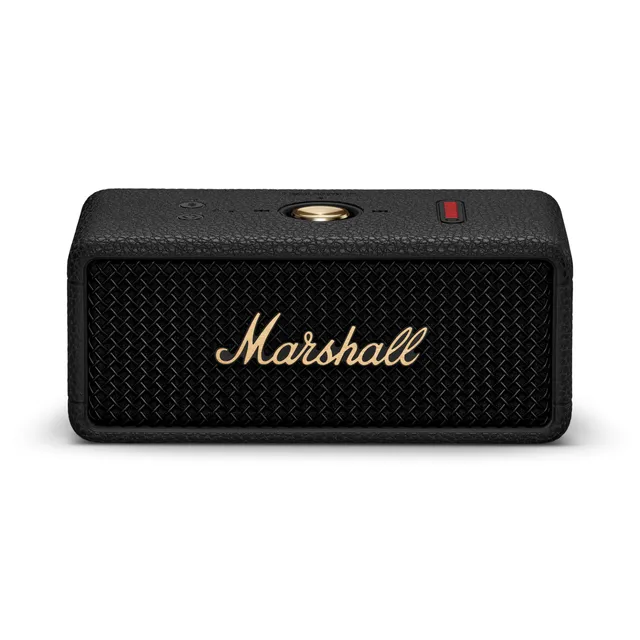
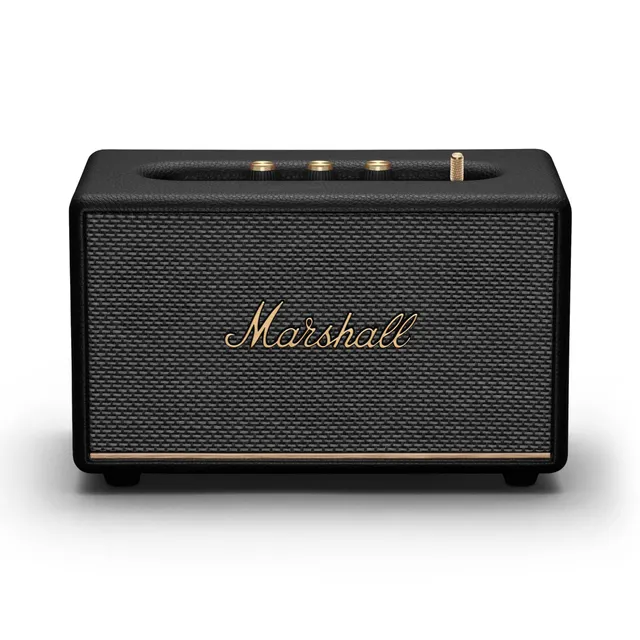
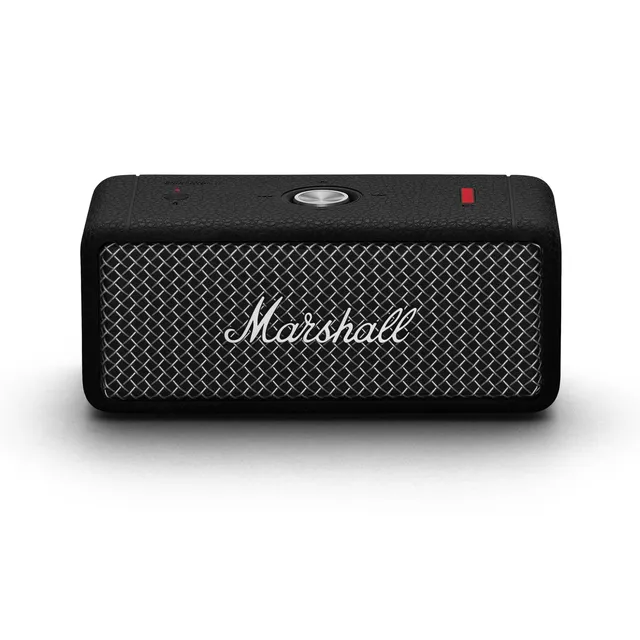
Marshall's Bluetooth speakers — the Acton, Emberton, Stockwell, and Woburn lines — are lifestyle audio products. They look like amplifiers because Marshall's design language borrows directly from decades of iconic guitar amp aesthetics: the brass panel, the script logo, the textured vinyl. That's styling, not circuitry. There is no instrument input, no gain stage, and no guitar speaker inside. Plugging a guitar into an aux port gets you a thin, buzzing signal at best and a disappointed you at worst.
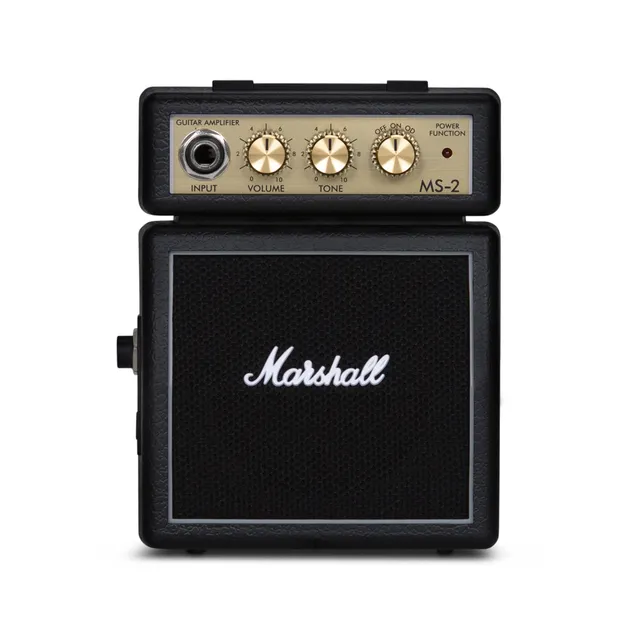
The footnote: Marshall does still make real guitar amplification, including brilliant practice-sized options. If you want the genuine amp experience in miniature, that's the Marshall MS2 mini guitar amp — a 1-watt battery-powered combo with actual volume and tone controls and a headphone jack for silent practice. One watt sounds tiny until you remember most home listening happens at a fraction of a watt anyway.
Bottom line: Marshall speakers reproduce music. Marshall amps make it. Buy the one that matches the job.
Watts measure power handling, not loudness. Decibels depend on speaker sensitivity and enclosure design just as much as wattage. A well-tuned 20W speaker with efficient drivers can sound louder and cleaner than a poorly designed 40W unit straining at its limits.
This matters when comparing, say, a compact Edifier MF200 — dual 36mm drivers plus a tuned bass radiator — against bigger numbers on a spec sheet. What you should actually look for: driver size, radiator or port design, and distortion ratings. Watts are a ceiling, not a promise.
Myth #3: "Studio monitors are only for studios"
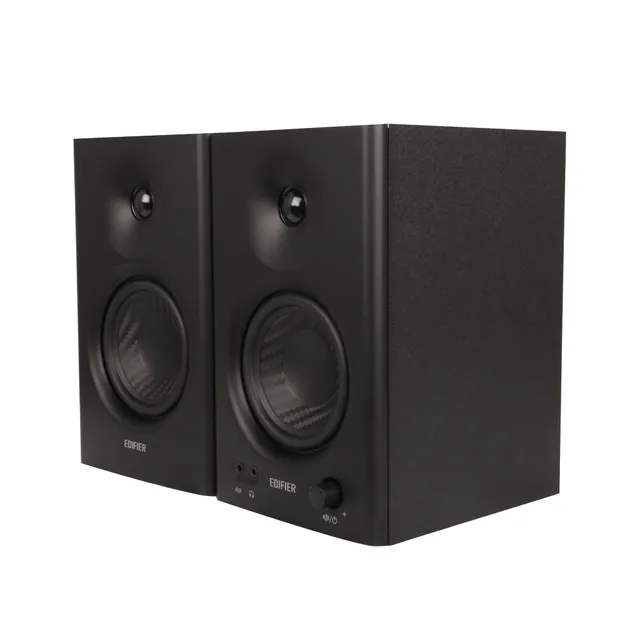
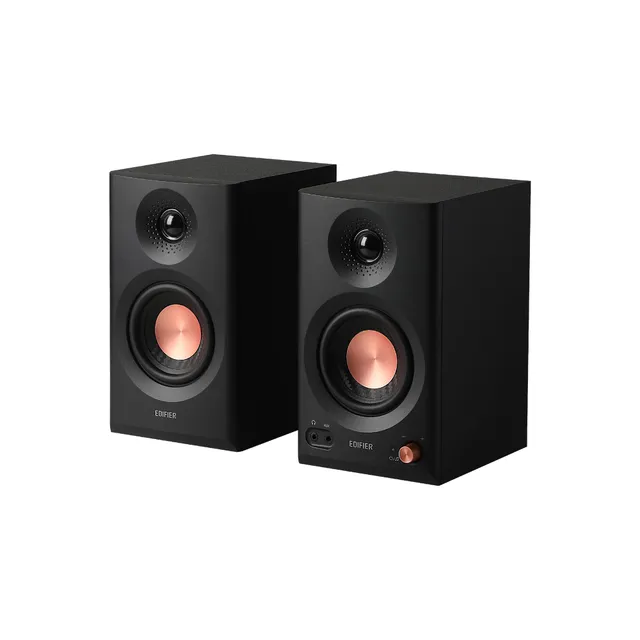
The word "studio" scares people off, but powered monitors are simply speakers engineered to tell you the truth about your music — which is exactly what most serious listeners want at a desk.
The Edifier MR4 pair ($203.99) uses 4" woofers, 1" silk-dome tweeters, and proper MDF cabinets, with a Music mode for casual listening. Its sibling, the Edifier MR3, is Hi-Res certified with a flat 52Hz–40kHz response and Bluetooth 5.4 — proof that "flat" and "wireless convenience" aren't opposites. If your desk setup still runs on laptop speakers or a plastic 2.0 kit, this is the upgrade myth #3 was hiding from you.
Myth #4: "Cheap earbuds can't do noise cancelling"
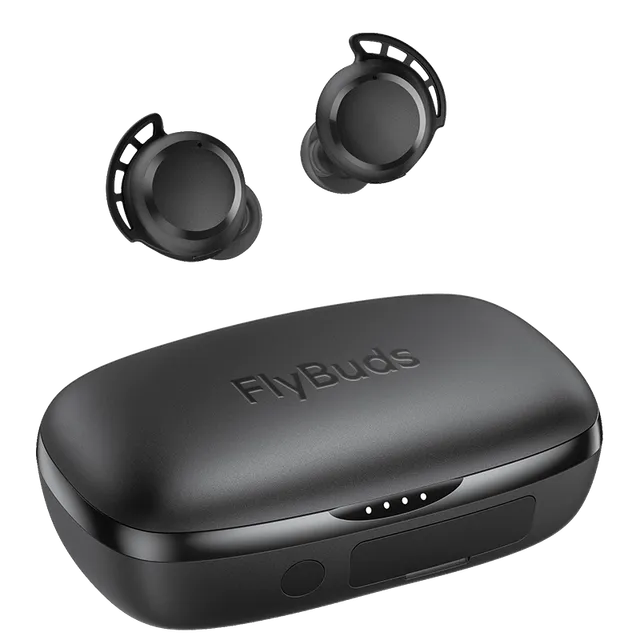
This one used to be true. It isn't anymore. Tribit's QuietPlus technology in the QuietPlus FlyBuds 3 delivers genuine noise reduction at $71.99, and the standard FlyBuds 3 adds Bluetooth 5.3, IPX8 waterproofing, and up to 110 hours of total playtime for $59.99. You're no longer choosing between your budget and your commute's peace and quiet. The premium tier hasn't stood still either — the Edifier ES850NB pushes hybrid ANC to -45dB with LDAC and Bluetooth 5.4 multipoint at $203.99, but the point stands: the floor has risen dramatically.
Myth #5: "Waterproof means you can swim with it"
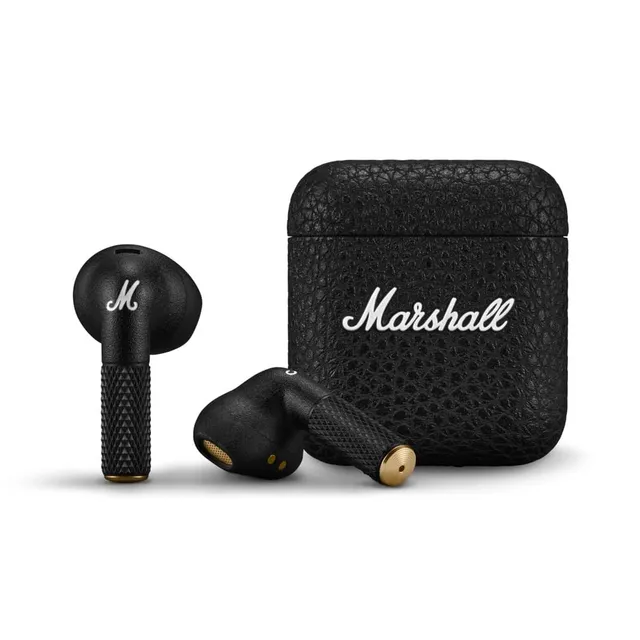
IP ratings get wildly misread. IPX4 (like the Marshall Minor IV earbuds) means splash resistance — sweat and rain, fine; the pool, no. IP67 (the Marshall Emberton II and Emberton III) means it survives dust and full submersion, which is a genuinely different class of ruggedness. IPX8, like the FlyBuds 3, is rated for continuous submersion. Match the rating to your actual life, not the marketing word.
Physics is stubborn, but engineers are clever. Bass radiator designs, DSP, and smart enclosure tuning let genuinely small speakers move real air. The Tribit StormBox Mini+ ($47.99) pairs dual 48mm drivers with XBass processing — and yes, you can turn the RGB lighting off if that's not your thing. Is it a subwoofer? No. Is it the muddy, tinny "small speaker sound" people remember from five years ago? Also no.
Myth #7: "Gaming headsets are just regular headphones with RGB"
Not when latency is in the spec. The Edifier G5BT CAT runs 45ms low-latency wireless with Hi-Res 40mm titanium drivers and a dual-mic ENC array — numbers that exist because competitive gaming punishes lag in a way music listening never will. (And if your mic isn't working on PC, check your Windows input device before blaming the headset.) Similarly, Tribit's G-Shock headset is built around long-session comfort and a noise-cancelling mic — design decisions a music-first headphone simply doesn't prioritize.
The takeaway
Almost every myth above comes from the same root: buying the image of a product instead of its actual capability. Marshall's speakers look like amps. Monitors say "studio." Cheap used to mean bad. Ask what the product is engineered to do, check the actual ratings, and match it to your real use case.
Or skip the research rabbit hole and browse the full lineup at Sonic Den Audio — every product above is in stock now, and none of them will pretend to be something they're not.